Teaching
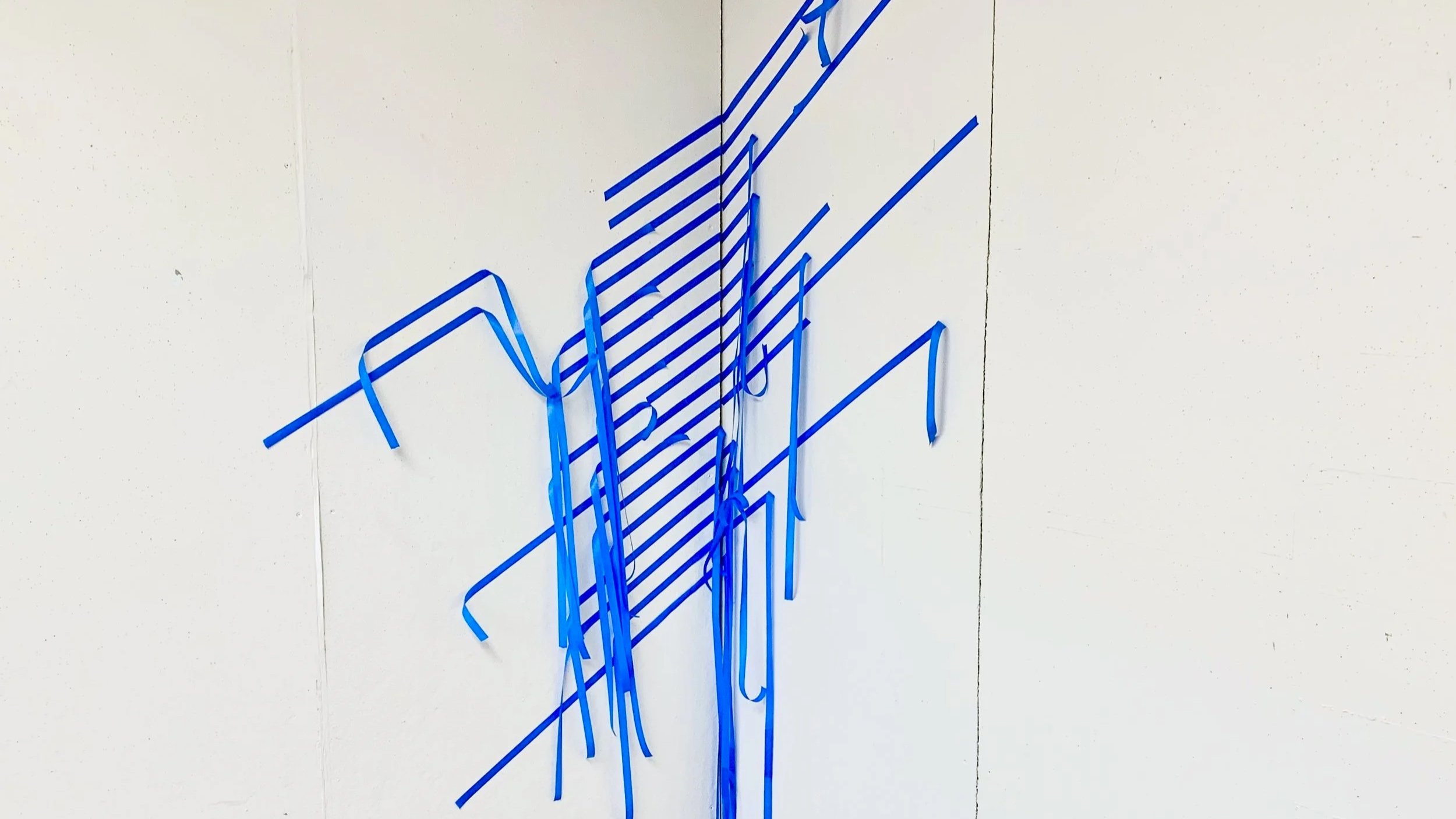
Umair Yusufi, study for a corner pattern (MDES, 2023).
We are encouraged to avoid designing the new for the sake of the new and instead to see the world as if we were ancient, worldly, and innocent all at once. Any newness designers are meant to bring to their work is one of vantage, which is at once easy to approach and difficult to accomplish with integrity.
Design training is an inexact science. In practice, design education ranges from artisanal master-apprentice models to quasi-scientific, data-oriented practices that build consensus for decision and action. At one end, manual skill is taught through direct demonstration (a master shows, and an apprentice imitates). At another, increasingly common end, surveys, statistics, and other research tools are used to justify design choices across a widening range of contexts.
Design also happens through modes closer to how we construct narratives and tell stories. Fictions play an important role in design, with speculative scenarios allowing designers to propose and test possibilities, values, consequences, and assumptions free from select burdens of reality. And more radical imaginations (those proposing deliberate detachment from some of the gravity of existing forms, norms, and practical constraints) can be deployed to cast critical light on society and social behavior.
All design (new, non-derivative design) imagines a better, alternative future, some more extreme than others. Some designs function to provide enhanced efficiency and so remain conventionally ambitious. Some designs are intended for underserved circumstances, or for the greater good. Others are driven by invention and curiosity and make their way by the light or thrust of a creative, experimental spirit.
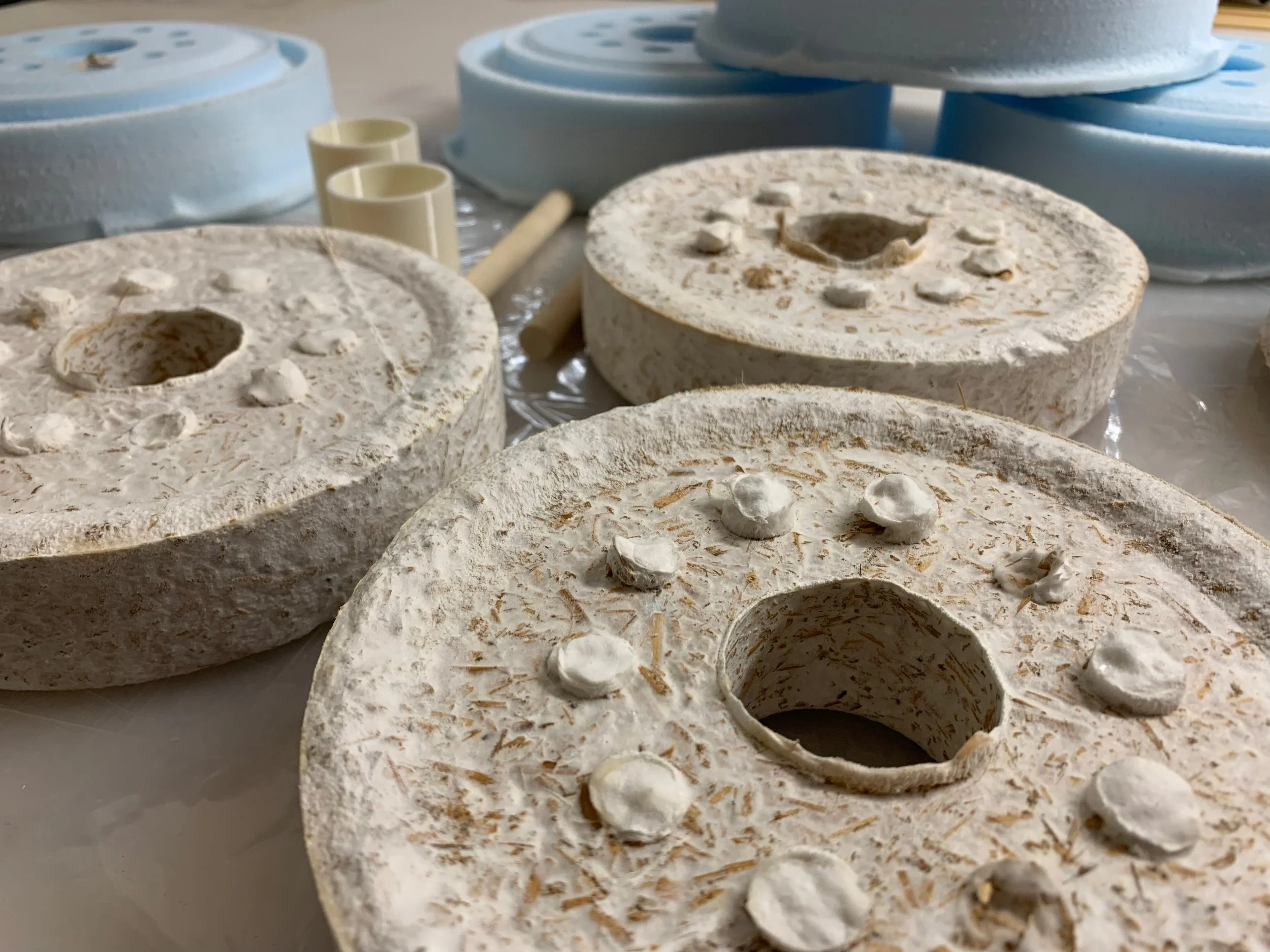
Digital fabrication + mycelium (BDES + Design Studies, 2023).
According to Herbert Simon’s well-established if widely contested definition of design, designers hatch courses of action aimed at changing existing situations into preferred ones. As a design educator I aim to teach students how to propose courses of action responsibly. I help to cultivate the attitudes and skills it takes to productively embark on the journey of discovery and development understood as design.
I envision curricula in which students and faculty are “in it together.” Curricular experiences that start out dirty and complex and work toward clarity (instead of the other way around) more closely honor the circumstances of the world. And looser, messier terrains also free faculty to develop and pursue speculative projects that connect their research interests with curricular experiences and, in the process, develop relationships and opportunities within our schools, cities, and beyond while enlisting students as co-conspirators.
Designers are no longer mere givers of form or stylists for consumer culture. The imperative to advocate for human form and to artificially structure human activity has evolved to incorporate the evaluation and navigation of messy scenarios that demand design activity ranging from co-creation to modes of response directed toward unresolvable, society-scale problems and opportunities. Defining and supporting the development of skills in a dynamic contemporary context predicated on complex societal or ecological predictions is the incredibly tricky and rewarding business of design education.